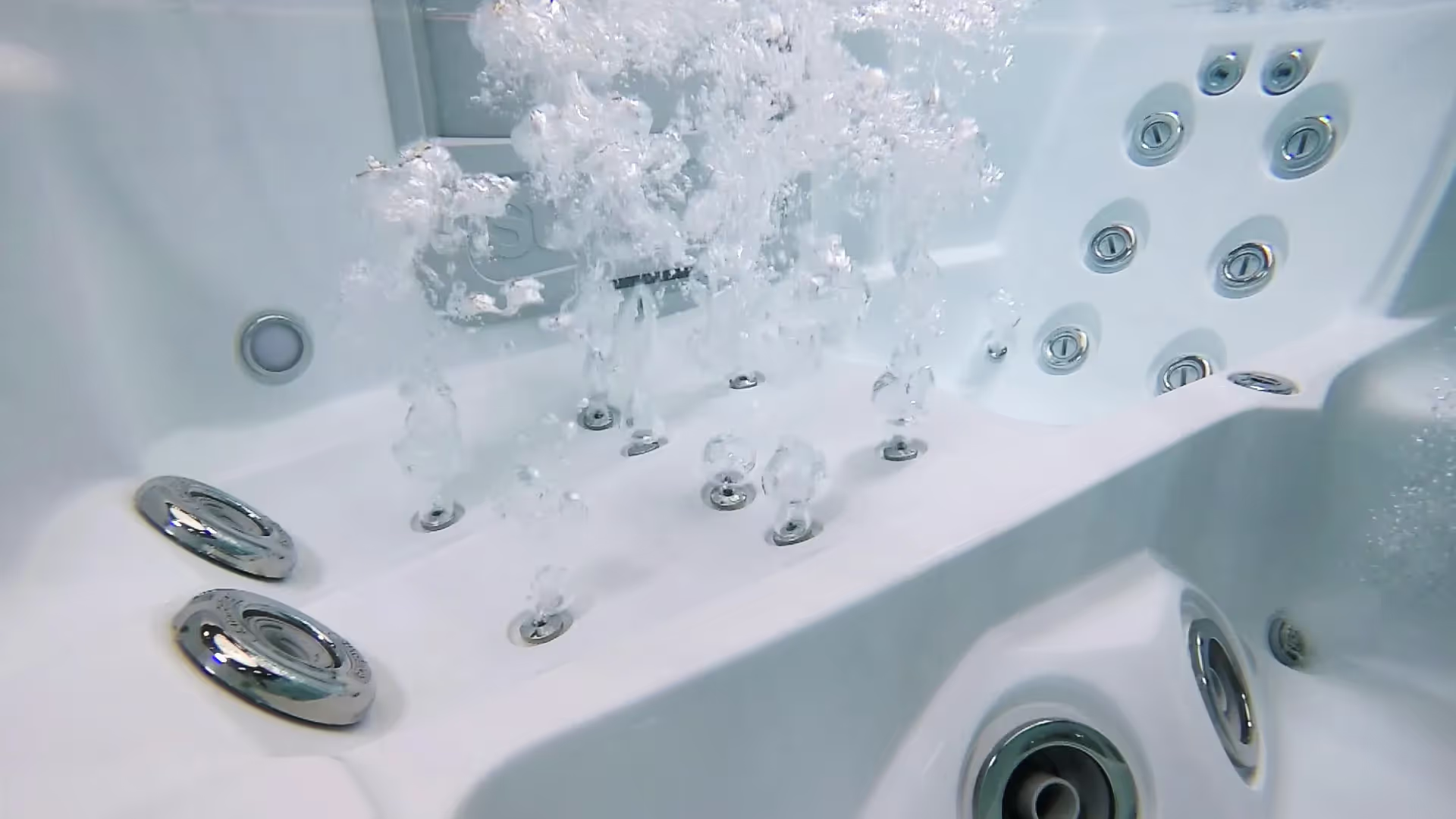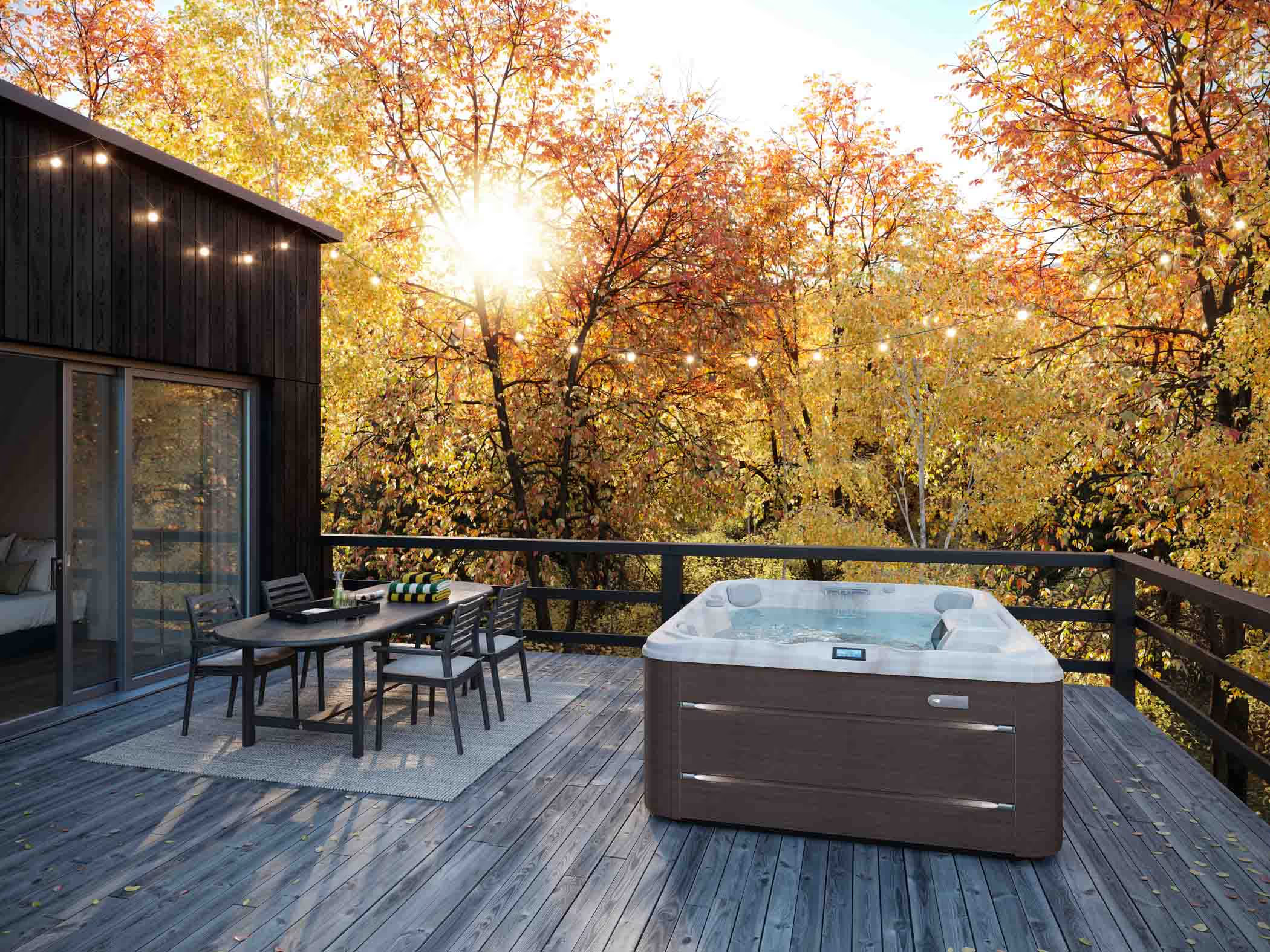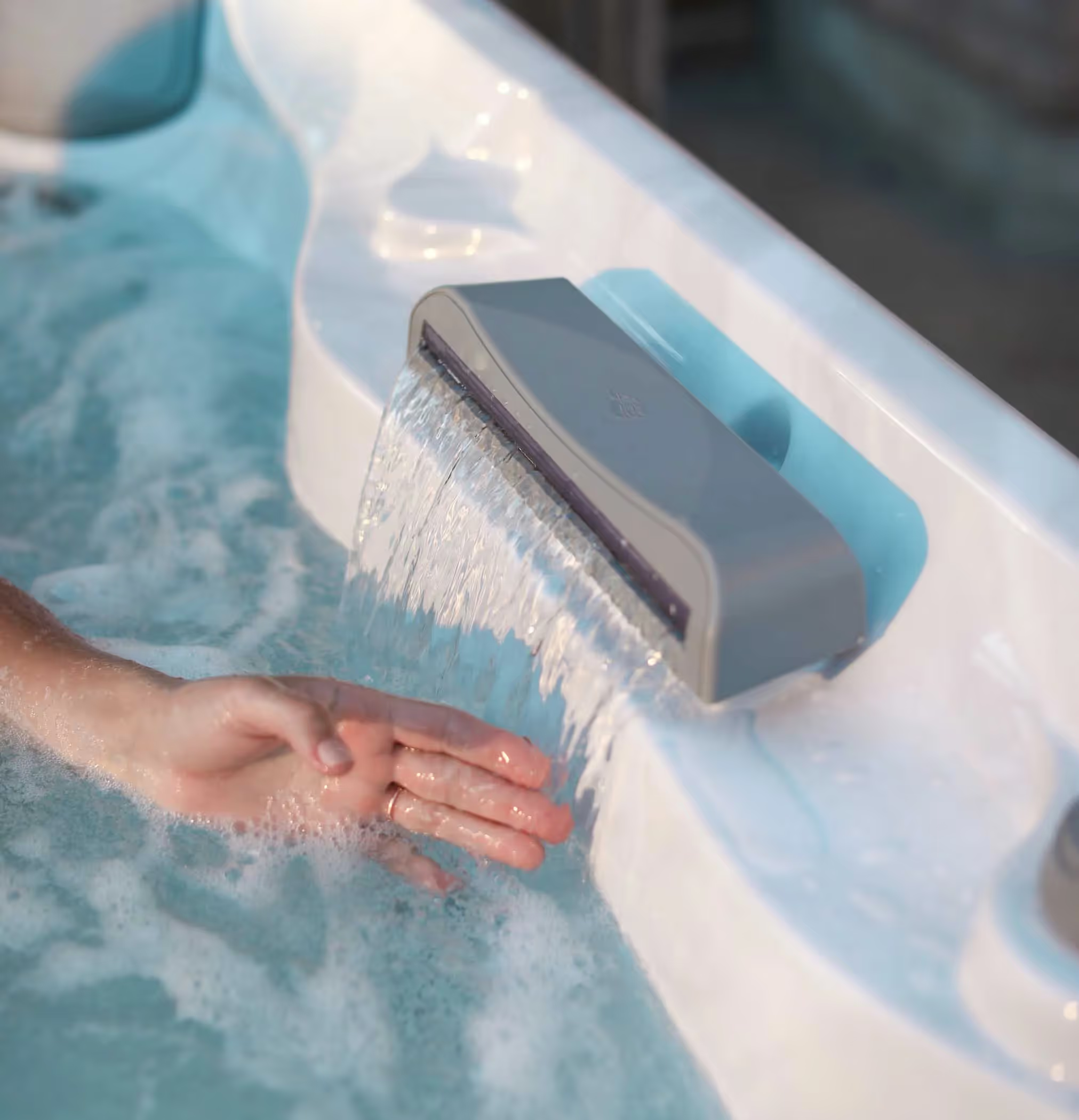


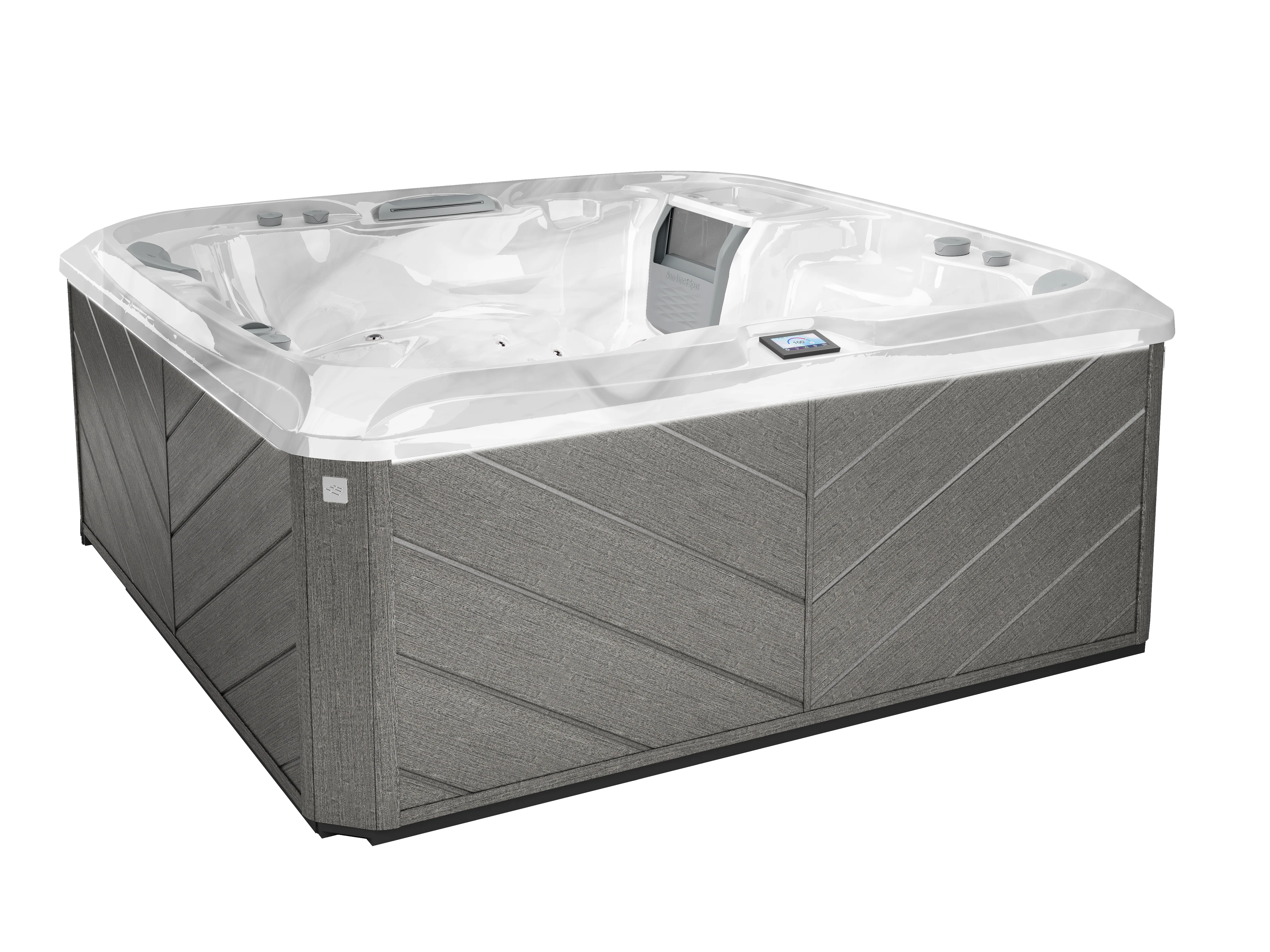
880™ Series
Aspen® – 880™ Series
Seating:
7-8
Open SeatSeats
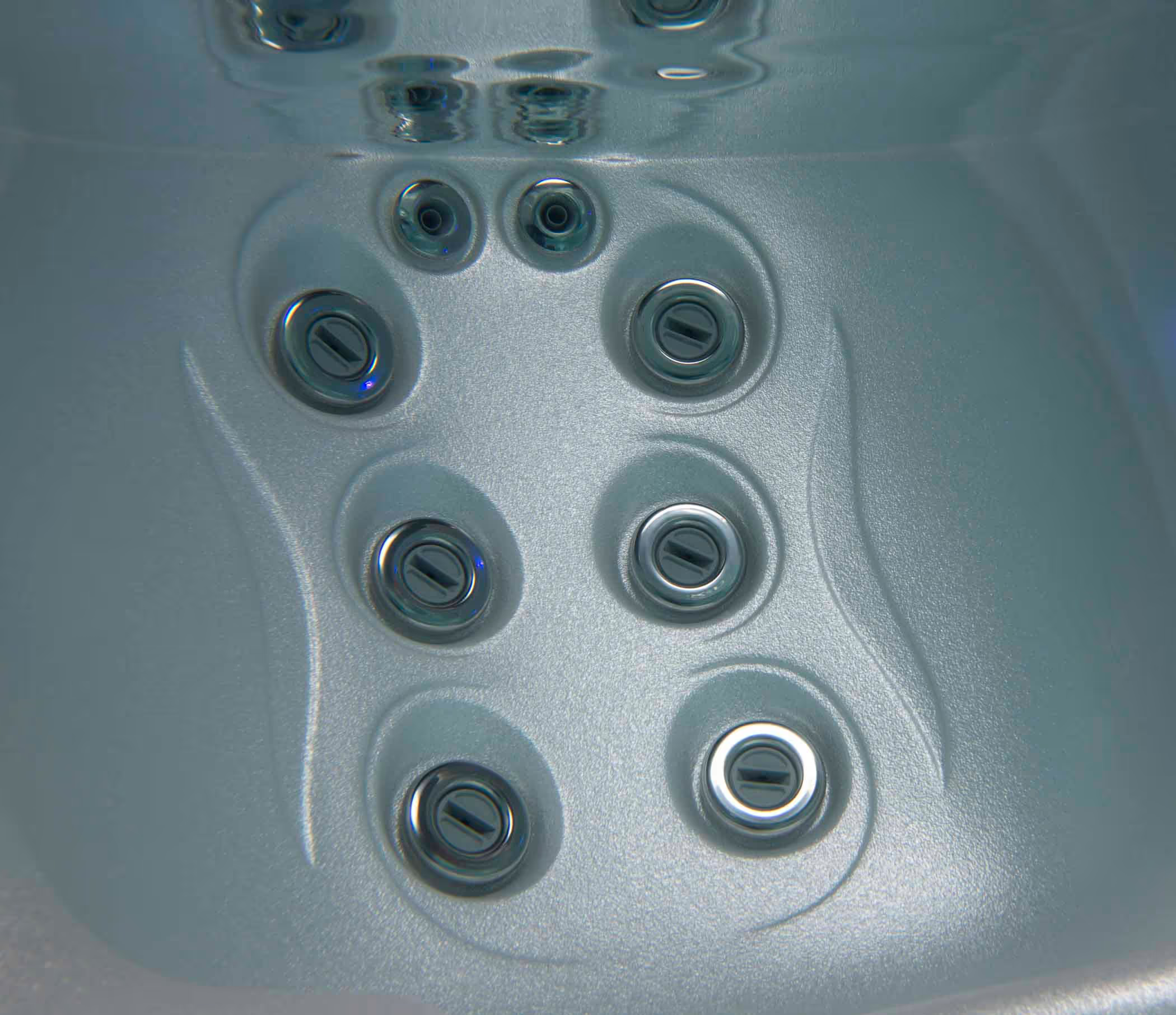
Fluidix Jet
Energy Efficient
Therapy & Recovery
SmartTub System
$$$$$
MSRP$29899
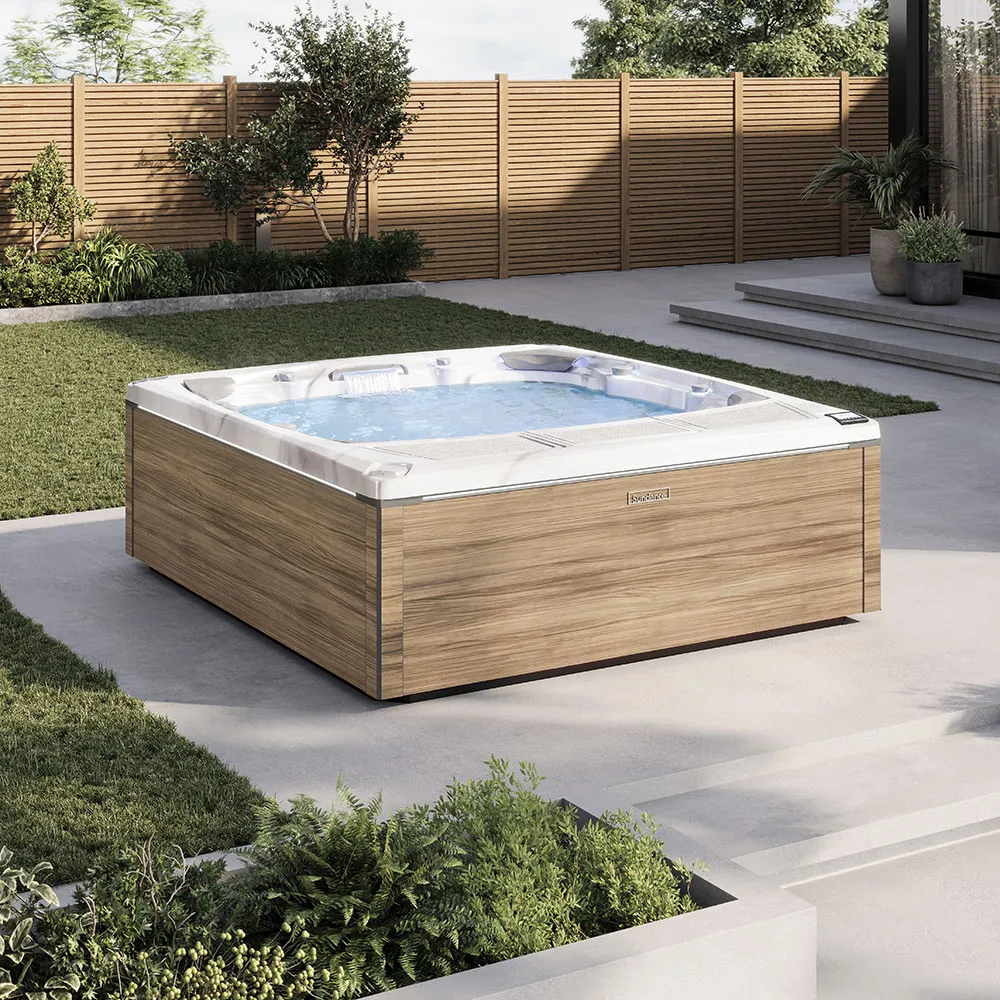
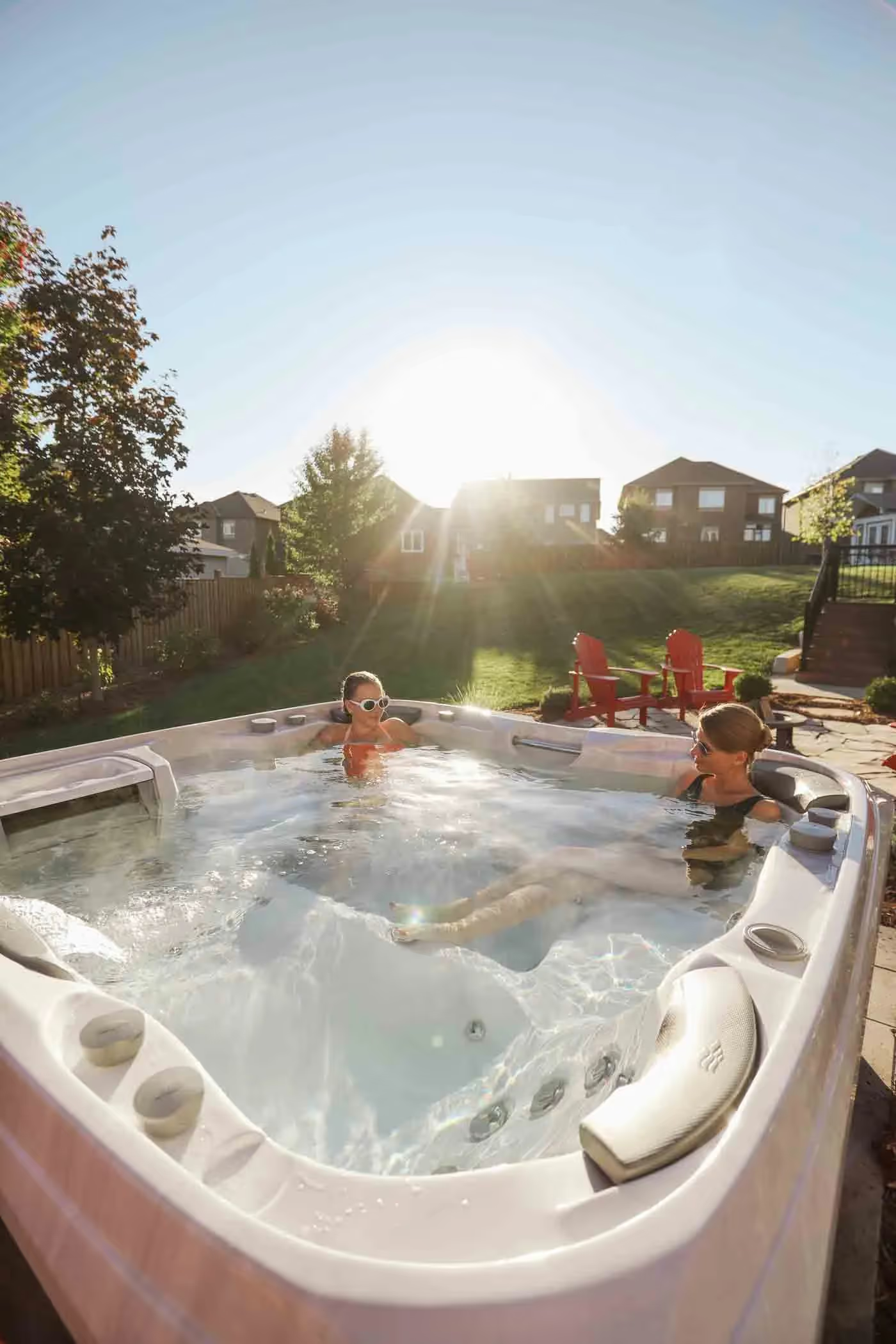
Make a bold statement with a superbly crafted spa, rich with features that are ideal for entertaining or simply relaxing.

Our best-selling spas offer an ideal balance of advanced features, premium comfort, and transformative hydrotherapy.

All the right features for all your best moments, at a value that makes it all possible. Now it's time to make it all happen.
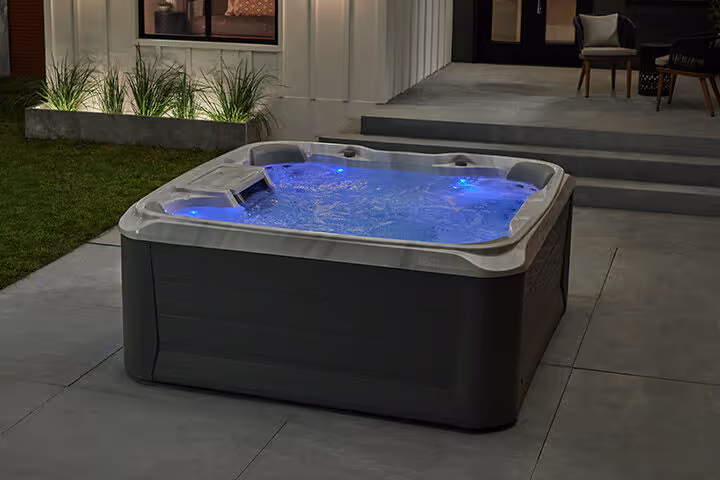
It's easy to love the 680 Series spa for all the fun and relaxing moments, but you'll also appreciate its superior durability and value.
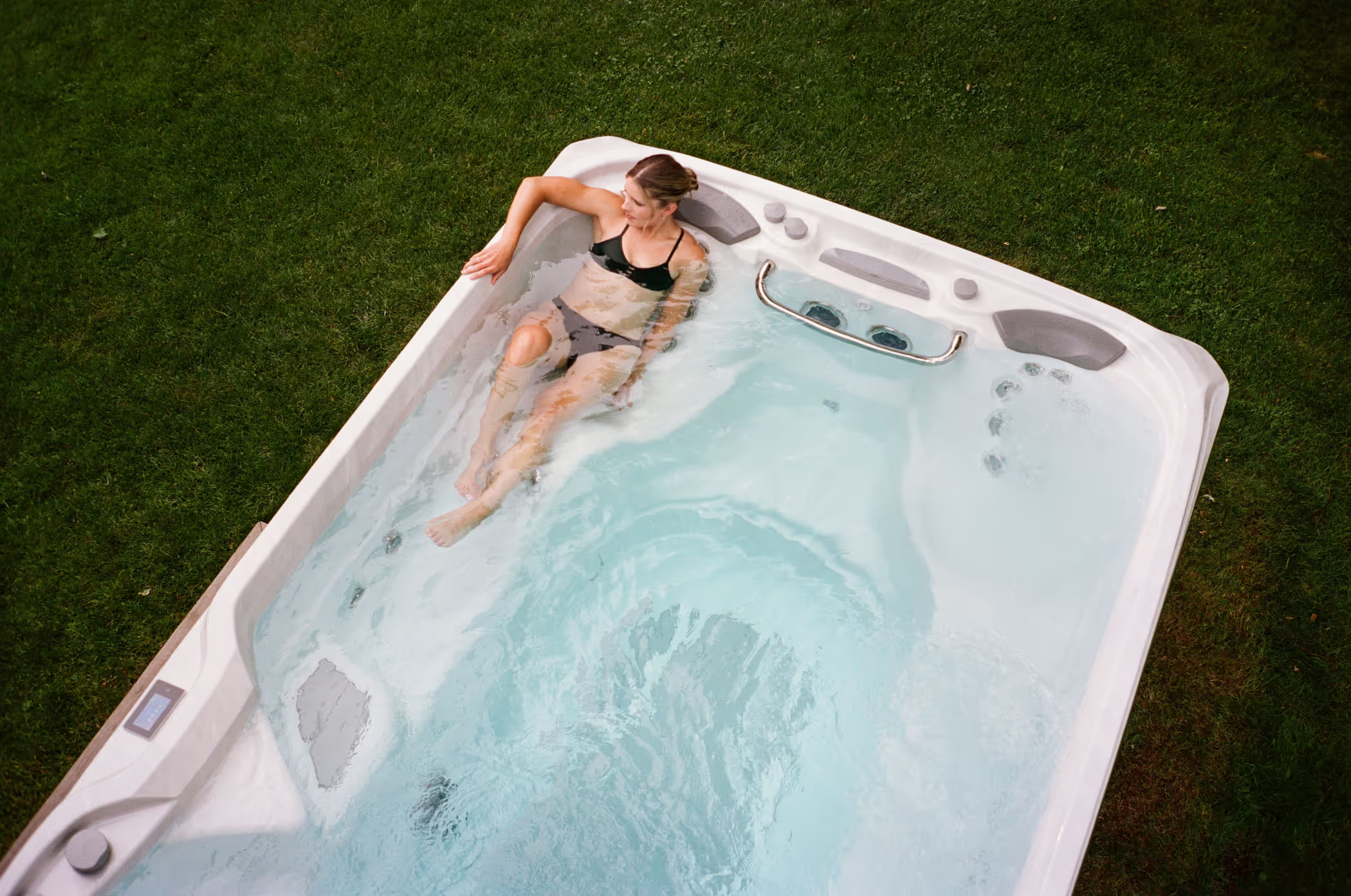
It's easy to love a swim spa for the daily movement and water time it brings, but you'll also appreciate how seamlessly it fits an active life at home.

Every Sundance® spa is built to maximize relaxation with features that make spa ownership a breeze so you can enjoy your new spa with confidence.
Find Your Spa
Explore Sundance models to find the perfect spa for you.



Ashley Field is director of sales training at Jacuzzi Group, where she leads global training strategy and development across multiple brands. Since joining in 2016, she has focused on building programs that align teams, support business goals, and enhance the customer experience. Field holds a bachelor’s degree in industrial design from Arizona State University and is a member of the Association for Talent Development.
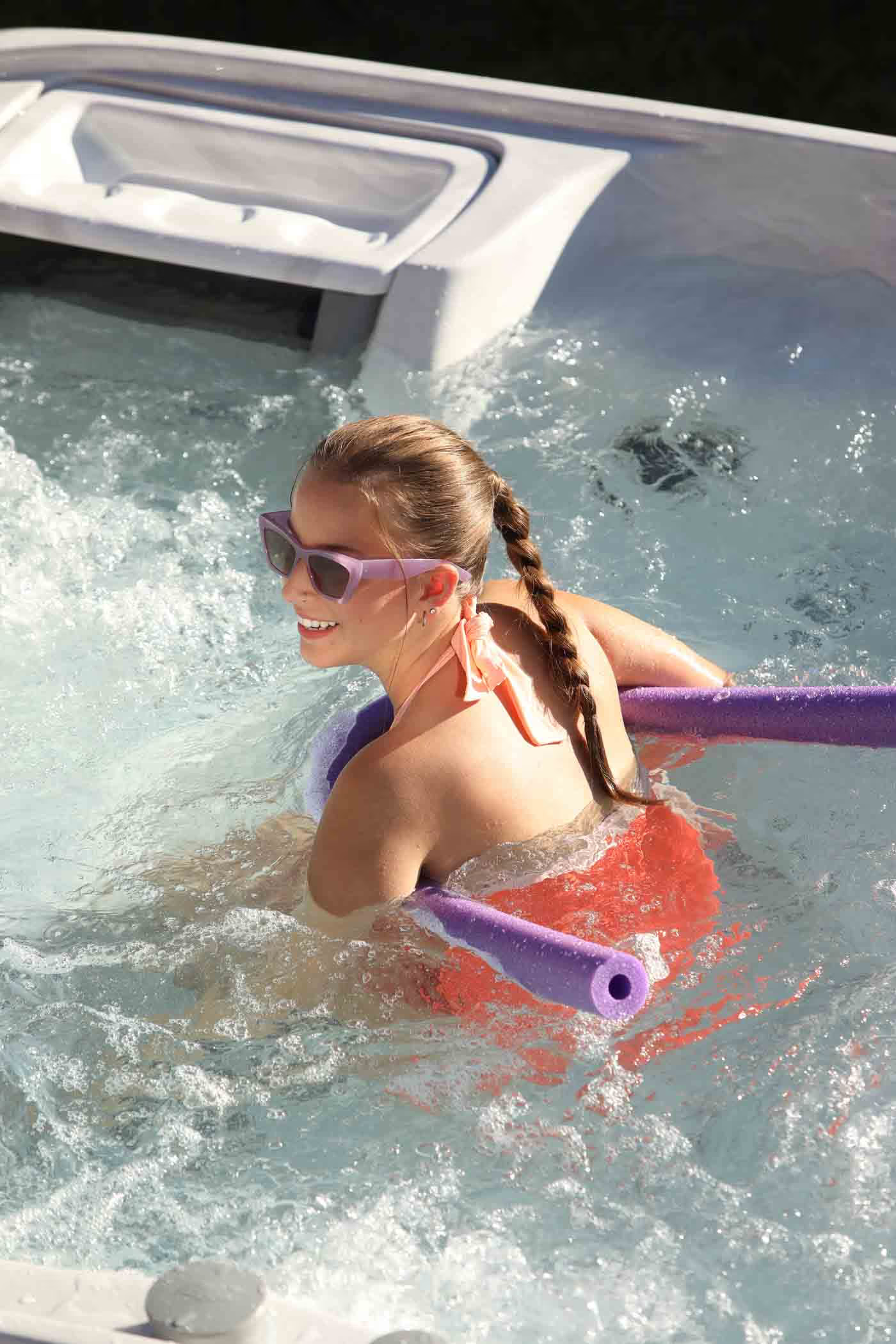
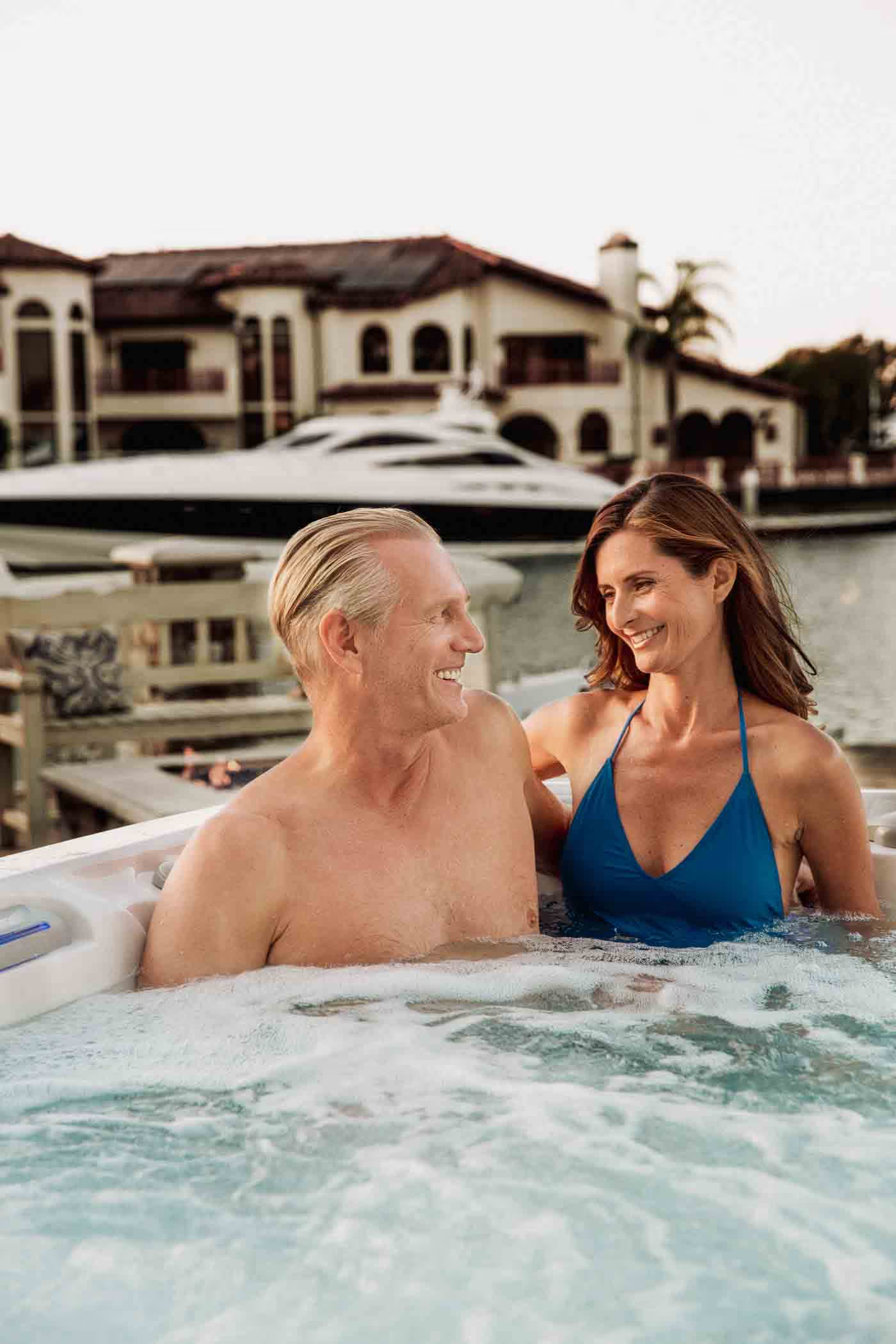
When the summer heat arrives, many spa owners assume their hot tub should sit idle until autumn. If you’re wondering how to cool a hot tub for summer comfort, this guide covers all the best methods. This guide is for hot tub owners who want to enjoy their spa year-round, especially during hot summer months when high temperatures can make traditional soaking uncomfortable. But here’s a different perspective: your hot tub can transform into a refreshing backyard retreat—a cool plunge or “warm pool” that offers genuine relief on sweltering July and August afternoons.
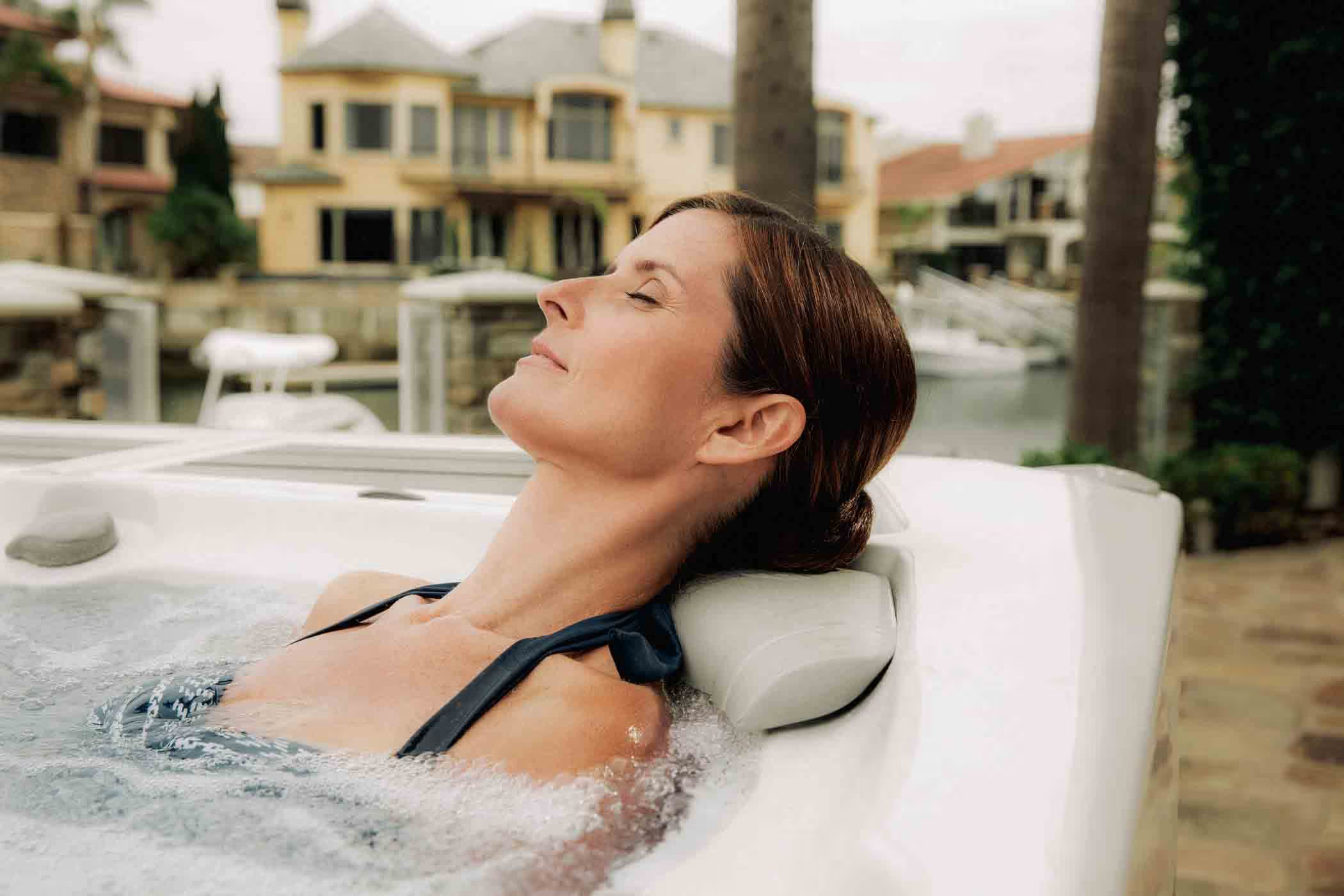
Consider those 95°F afternoons when stepping outside feels like walking into an oven, or humid evenings when the air itself seems to cling to your skin. In these moments, water temperature between 85–92°F actually feels wonderfully refreshing. Rather than overheating, you find yourself cooling down, muscles loosening, stress dissolving. Your spa becomes a sanctuary from the summer days rather than something to avoid.
Keeping your spa running cooler instead of shutting it down completely offers real advantages. You maintain better water quality without the bacterial challenges of stagnant water. Startup is immediate—no waiting 12–24 hours for heating when you suddenly want to soak. And most importantly, you continue enjoying the wellness benefits that drew you to hydrotherapy in the first place, all summer long.
At Sundance Spas, we design our systems for flexible, season-long use. Our approach to wellness means your spa should serve you every month of the year—adapting to your needs rather than dictating them. Whether you’re seeking post-workout recovery on a hot afternoon or a relaxing soak under the stars on a warm evening, your Sundance hot tub is ready.
Understanding temperature ranges helps you find your perfect summer comfort zone. During cold weather months, most people enjoy their hot tub between 100–104°F—that classic, enveloping warmth that melts away winter tension. But summer calls for something different.
Here’s how different temperature ranges feel in practice:
Temperature Range
Experience
Best For
80–85°F
Cool plunge, genuinely refreshing
Quick cooldowns after yard work, exercise recovery
86–92°F
Pool-like refreshment with gentle warmth
Extended relaxation, family time on hot days
93–98°F
Warm but not stifling
Evening soaks, gentle hydrotherapy
99–104°F
Traditional hot tub experience
Cool evenings, transitional seasons
Safety guidance remains important regardless of season. The upper safe limit for hot water stays at 104°F. For children, a set temperature of 98°F or lower provides safer soaking conditions. Pregnant women should consult their healthcare provider but generally stay at 100°F or below to protect body temperature regulation.
Most modern Sundance hot tubs can be set as low as around 80°F, giving you complete flexibility. In very hot weather with ambient temperature exceeding 95°F, expect water to take 12–24 hours to drift down naturally—which is why planning ahead matters.
In a 90°F August afternoon in Texas, for instance, water at 88°F feels genuinely refreshing. You step in expecting warmth but find relief instead. The jets massage tired muscles while cool water keeps you comfortable. This is summer hydrotherapy at its best.
Before attempting any cooling methods, always start with your control panel and owner’s manual. Every spa model has specific procedures and capabilities, and understanding yours ensures you get results without risking equipment or warranty issues.
The methods below range from gradual approaches (working over several hours or overnight) to rapid solutions for when you need temperature to drop before a specific event. Some work best in combination—venting the cover while running circulation at night, for example, produces faster results than either method alone.
After any significant temperature change or water swap, re-test your water chemistry. Temperature affects how sanitizers work and how chemicals balance. Protecting both bathers and equipment means keeping spa water properly balanced even as you adjust for comfort.
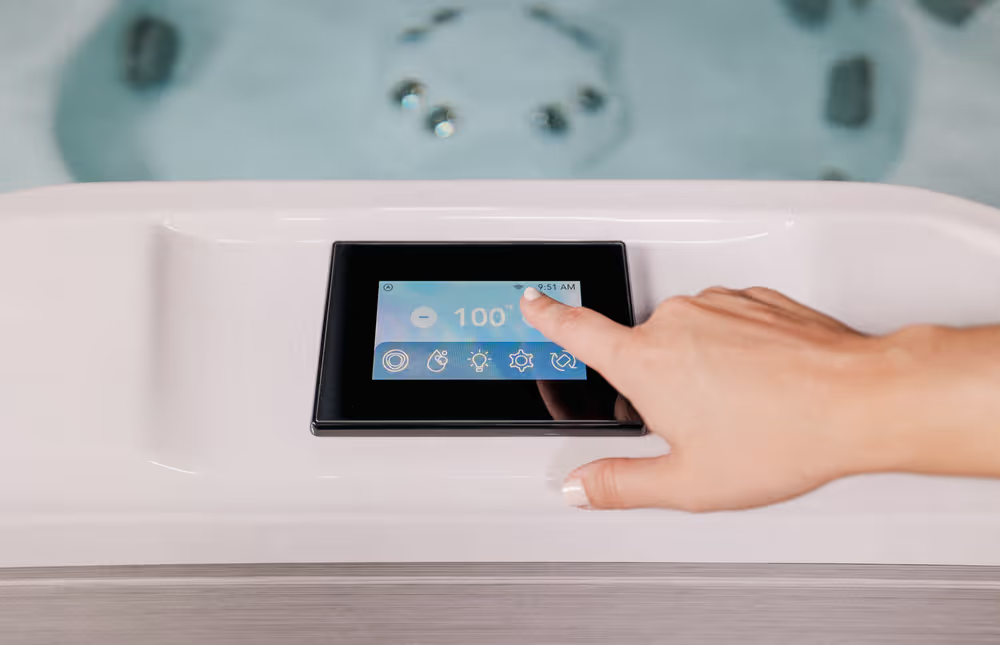
The simplest solution starts with your thermostat. Using your Sundance digital control panel, lower the set temperature from the typical 100–104°F down to your target summer range—anywhere from 80–90°F depending on your preferences. Lowering the set temperature means adjusting your spa’s control panel to the lowest setting, which turns off the heater and allows the water to cool.
Make this adjustment at least 12–24 hours before you plan to use the spa, especially during heat wave conditions when outdoor temperatures exceed 90°F. Once you’ve lowered the set point, your heater will only activate if water sinks below that new target. This prevents the system from fighting against your cooling efforts.
Planning a Saturday afternoon gathering? Adjust your temperature settings Thursday or Friday evening. By the time guests arrive, your spa will have naturally drifted down to that comfortable cooler temperature that makes hot weather soaking enjoyable.
Some Sundance models offer temperature “lock” or limit features—particularly useful for summer homes or rental properties where you want to prevent guests from accidentally cranking the heat back up to 104°F.
Most Sundance hot tubs include energy-saving modes designed to reduce operating costs. Economy or Sleep mode limits heating, helping to prevent 'heat creep' during the day. In summer, these same modes become powerful cooling allies. Economy and Sleep modes typically limit heating to filtration windows or maintain water slightly below your set point.
The key strategy: schedule your filtration cycles during cooler hours. Running your pump and filters between 2–6 a.m. and after sunset takes advantage of lower air temperatures. Daytime circulation during the hottest days can actually add heat through pump friction and ambient exposure, creating unwanted “heat creep.”
In climates like Arizona or Florida, where summer highs regularly exceed 100°F, these modes can keep your water 3–5°F cooler than standard mode running around the clock. That difference transforms an uncomfortably warm soak into a refreshing one.
Consult your Sundance manual or dealer for the exact name and behavior of energy-saving modes on your specific model. On a typical mid-July evening, you might switch to Economy mode after your sunset soak, letting the system maintain cooler water overnight and through the next day’s heat.
Water moving across the surface releases stored heat into the surrounding air. Running the jets and pumps without the heater on means circulating the water to promote cooling, as the pump moves water without adding heat. By running your jets or circulation pump with the heater disabled (or set very low), you encourage natural cooling through evaporation and air contact.
This approach works best after sunset, when air temperatures fall below your water temperature. Between 10 p.m. and midnight on summer nights, running the circulation can drop your spa several degrees by early morning. The fresh, cooler night air draws heat away from the water surface.
One caution: constant daytime jet use can actually add heat. Pump motors generate warmth, and exposing water to 95°F+ afternoon air won’t help. Aim for intermittent short cycles rather than hours-long runs during the afternoon.
Sundance systems are designed for quiet, efficient circulation that supports both filtration and gradual cooling when used strategically. Your spa can stay cool without fighting against its own equipment.
Your hot tub cover is brilliantly designed to retain heat—which becomes a double-edged sword in summer. On 85–100°F days, that insulating cover can trap heat and push water 2–4°F higher than your set temperature, contributing to hot tub overheating even when the heater isn’t running.
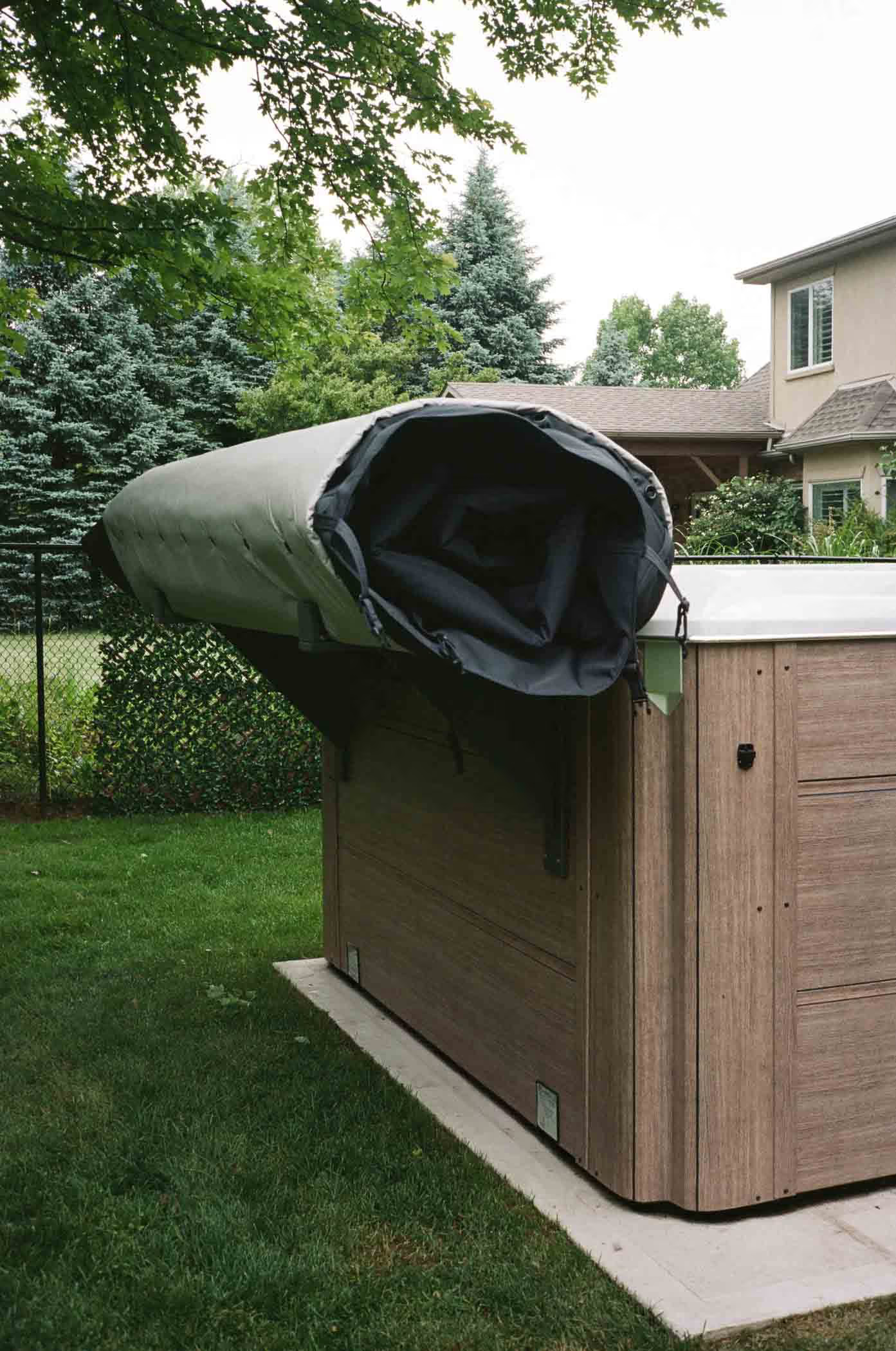
Safe venting techniques make a real difference. Prop one side of the cover in an open position using a towel, foam wedge, or your cover lifter. This allows hot air to escape while still providing some protection. Evening and early morning hours work best, when outdoor temperatures drop below your water temperature.
Avoid leaving the tub completely uncovered all day in direct sun exposure—this creates safety concerns around children and pets while also allowing debris, insects, and UV exposure to affect your water and shell.
Simply leaving the cover fully open for 1–3 hours on a breezy evening can noticeably cool your spa before a late-night soak. Once you finish, close and latch the cover again to keep debris out and maintain your newly achieved cooler temperature.
When you need a rapid 5–10°F temperature drop before a specific event or weekend gathering, partial drain and refill delivers results faster than passive methods.
Here’s a concrete example: on a 90°F afternoon with your spa sitting at 100°F, drain 25–50% of your water (roughly 75–150 gallons from a 300-gallon hot tub). Refill with 60–70°F tap water from your hose. Within an hour or two, your spa reaches that comfortable mid-80s range perfect for hot weather enjoyment.
This approach also “resets” older water, supporting better clarity and easier balancing during peak summer use when bather loads tend to increase. Consider it a partial water change that serves double duty.
Before draining, turn off power at the breaker to avoid running pumps dry. Follow Sundance’s recommended refill procedures, and test your water chemistry within an hour or two after the new water temperature stabilizes. Adding cold water dilutes your sanitizer and affects pH—rebalancing keeps everyone safe.
For homeowners in very hot climates who want consistent cooling capability, dedicated spa chillers or reversible heat pump systems offer a permanent solution. A chiller is a device that can actively cool hot tub water, sometimes to as low as 5°C (41°F). These units can actively cool Sundance hot tubs, maintaining comfortable temperatures even when desert heat pushes ambient conditions past 110°F. Some systems cool at 2–5°F per hour depending on capacity.
Contact your local authorized Sundance dealer to discuss compatible cooling add-ons and warranty considerations before installing any aftermarket equipment. Professional installation ensures your system works correctly and maintains coverage.
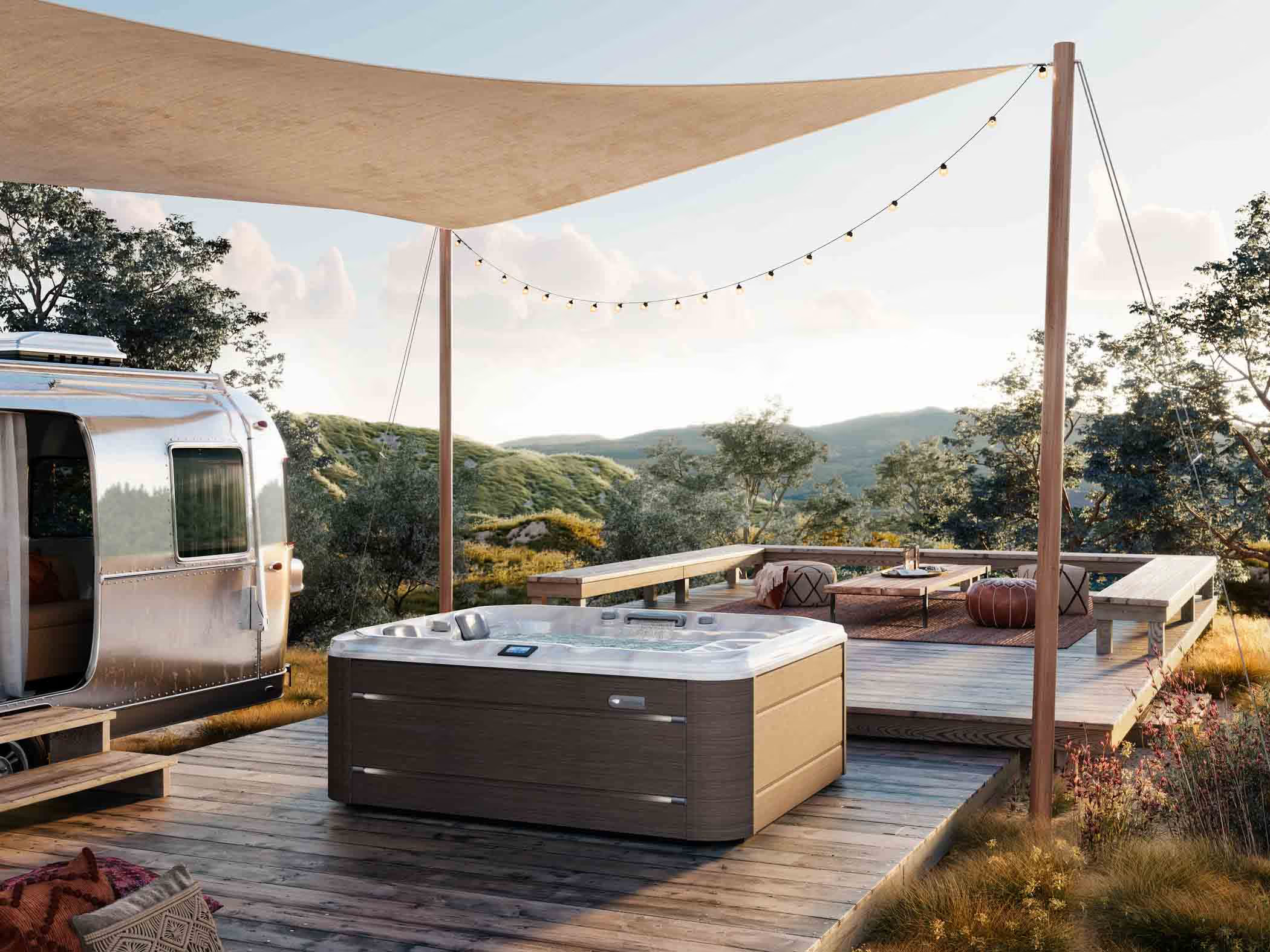
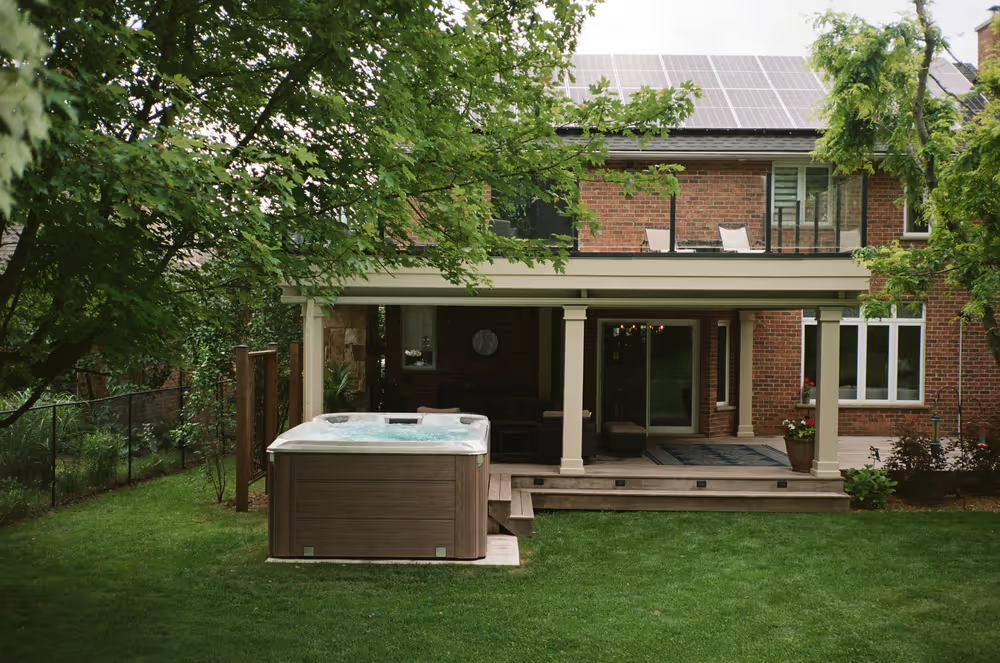
Direct midday sun on your spa’s shell and cabinet leads to “thermal creep” that undermines your cooling efforts. Dark-colored spas on exposed patios suffer most, absorbing solar radiation that can add 5°F or more to your water temperature.
Practical shading solutions make a measurable difference:
Studies show shaded spas maintain set temperatures with 30–40% less energy strain overall. Adding a fabric shade sail in June can keep your backyard retreat several degrees cooler through August in a south-facing yard.
Maintain your manufacturer’s recommended clearances for service access and ventilation around the cabinet. Well-planned shading also enhances your overall backyard design, extending the hours when your tub feels comfortable and making your outdoor space more inviting for the entire family.
Cooler water doesn’t mean sacrificing the massage, relaxation, or recovery benefits that make hydrotherapy so valuable. Your jets work just as effectively at 88°F as they do at 102°F—the difference is how your body responds.
At 85–95°F, your spa’s hydrotherapy jets ease joint stiffness after summer sports, golf, or gardening without overheating your core. You can stay cool while still getting therapeutic benefit. The water supports sore muscles, the jets circulate healing pressure, and you emerge feeling refreshed rather than drained.
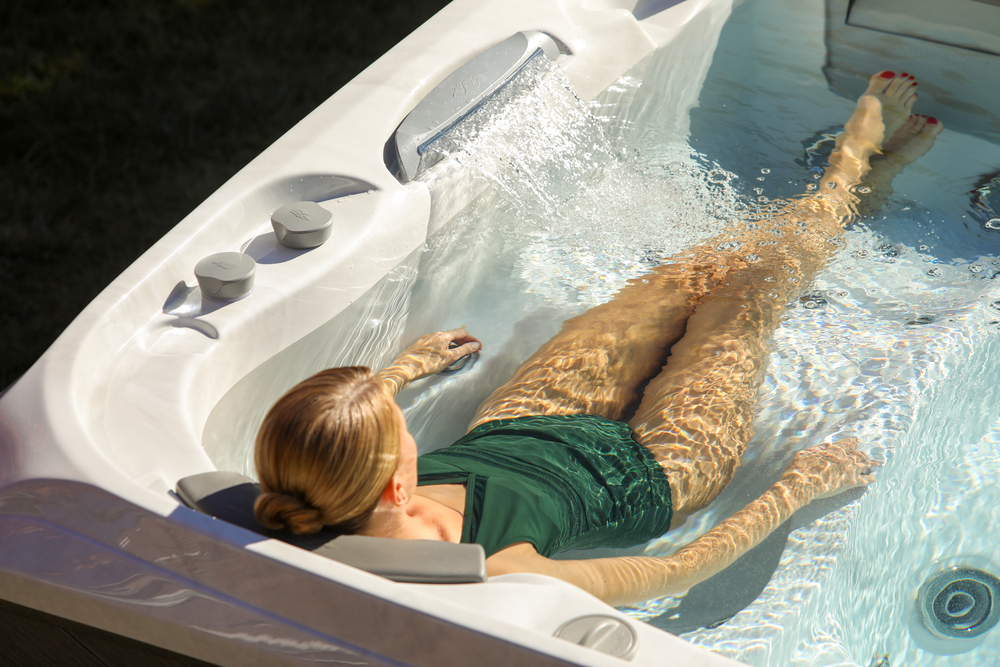
Try shorter sessions at cooler temperatures—10–20 minutes often provides all the benefit you need without the extended cool-down period required after traditional hot soaks. Explore different seats and jet patterns for targeting specific areas: lower back after yard work, shoulders after swimming, legs after a morning run.
Sundance wellness technologies—ergonomic seating, advanced jet design, thoughtful hydrotherapy layouts—perform beautifully at lower temperatures. These aren’t compromises; they’re adaptations that let you enjoy genuine wellness benefits throughout the hottest days of summer.
Early mornings and late evenings offer the most comfortable conditions for summer spa use. The air is cooler, humidity often drops, and the experience shifts from potentially overwhelming to genuinely relaxing.
Consider establishing summer routines that work with nature rather than against it:
A warm-to-cool soak in the evening can actually help regulate body temperature and support better sleep on hot nights. The contrast between warm water and cooler night air triggers natural relaxation responses, preparing your body for rest.
On the hottest days—when the heat index exceeds 100°F—limit midday sessions even with cooler water. Your body is already working hard to maintain comfortable temperature; adding any heat stress isn’t worth the risk. Listen to your body: exit the spa immediately if you feel light-headed, overly flushed, or uncomfortable at any time.
Cooler water still requires consistent sanitizing, filtration, and testing—perhaps even more attention during peak summer use. While bacteria grow more slowly in cooler temperatures, the increased bather loads, sunscreen, cosmetics, and outdoor debris of summer create their own challenges.
Higher use means more frequent testing. Aim for 2–3 times per week during active summer months, checking sanitizer levels, pH, and alkalinity. Quick adjustments using quality Sundance-approved water care products keep everything water balanced and safe for bathers.
Keep your filters clean and pumps running efficiently. Good filtration supports both cooling (by maintaining circulation) and sanitation (by removing contaminants). Rinse filters weekly during heavy-use periods, and consider keeping a spare set to rotate while cleaning.
Sundance offers advanced water treatment options on specific models that simplify summer upkeep while reducing chemical demands. These technologies help keep water clean even with increased use, giving you more time for relaxing and less time testing.
Sundance hot tubs are engineered for flexibility across all seasons. Our robust insulation doesn’t just retain heat in winter—it stabilizes water once you’ve cooled it for summer, preventing rapid temperature swings that make comfort unpredictable.
Precise digital temperature control lets you dial in exactly the experience you want, from traditional 104°F soaks to refreshing 85°F cooldowns. Energy-smart circulation systems maintain water quality while minimizing the heat buildup that can come from less efficient pumps.
Our wellness technologies—hydrotherapy jets designed for therapeutic massage, ergonomic shells that support your body naturally, and optional accessories for enhanced comfort—perform beautifully regardless of temperature setting. Swim spas in our lineup offer even greater flexibility, with larger water volumes and optional climate control features for year-round aquatic exercise and relaxation.
If you’re considering an upgrade, look for Sundance models compatible with advanced water care systems and, where climate demands, optional cooling solutions. Your local authorized Sundance dealer can provide personalized recommendations based on your specific climate, backyard layout, and how you love to use your spa.
The following questions address common concerns about summer spa use that weren’t fully covered above.
Cooling time depends on your starting temperature, ambient temperature, and chosen method. Using passive approaches—lowering the set point, venting the cover overnight, and running circulation during cool evening hours—you might see 100°F water drop to around 90–95°F by morning, roughly 8–12 hours.
For faster results, a partial drain and refill with cool hose water achieves similar temperature drops in just a couple of hours, including time to rebalance your chemicals. This makes it ideal for last-minute adjustments before weekend gatherings.
Most residential hot tubs are designed to operate optimally at or above approximately 75–80°F—not the near-freezing temperatures associated with true cold plunge pools. Going significantly below manufacturer-recommended minimums can affect water chemistry performance, sanitizer effectiveness, and overall comfort.
Generally, yes. Maintaining 85–95°F requires less heating energy than holding 100–104°F, and using Economy or Sleep modes at night further reduces consumption. Some owners report 10–20% energy savings during summer months with strategic temperature management.
However, high ambient temperatures can counteract some savings—pumps and sun exposure still add heat that your system must manage. Compare a few recent electric bills as you adjust filtration schedules to find the balance between comfort, water clarity, and cost that works for your household.
This isn’t recommended for several reasons
Seating:
Seats
Seating:
Seats
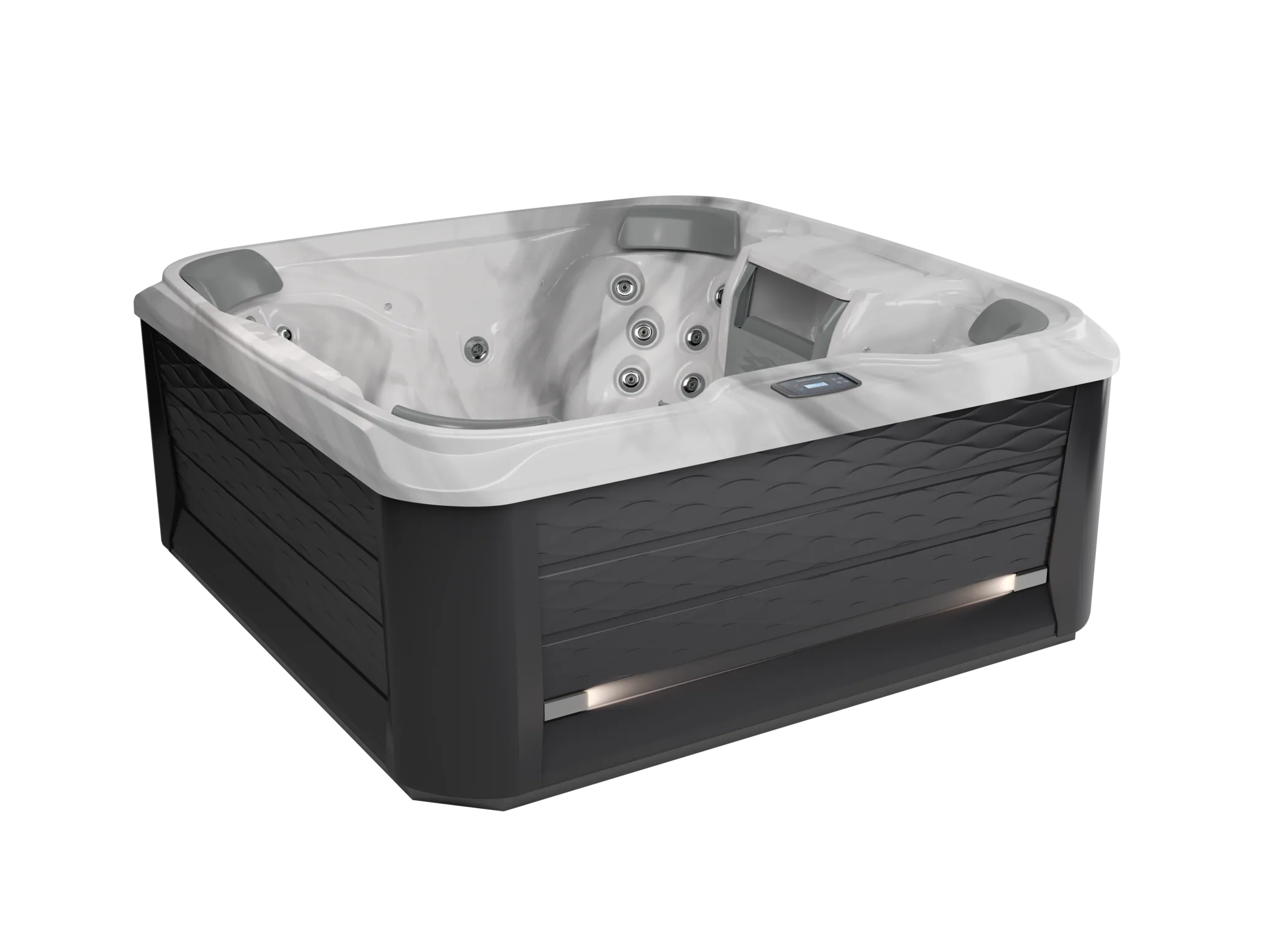
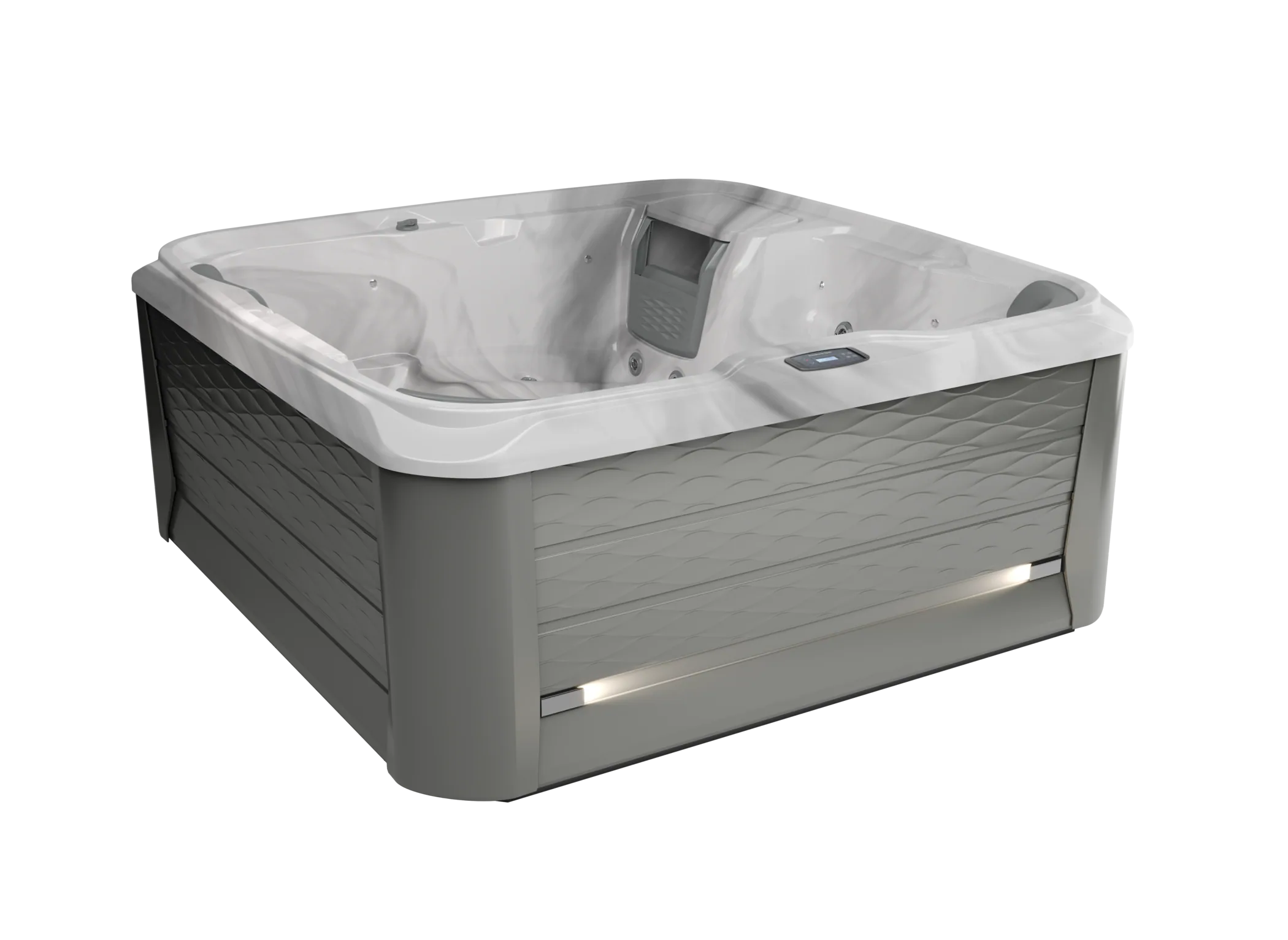
Seating:
Seats

Start exploring the features Sundance® spas have to offer, and learn how to make spa time a focal point in your journey to share meaningful moments with the people you love.





.jpg)






.avif)




.avif)




.avif)